 Wittmann AZ
Wittmann Tankless Water Heater Service: Flush, Install or Repair
On-demand hot water works well when the gas, vent and water supply match the unit. Call the dispatch line and describe what your heater is doing.
CALL (623) 323-3182ALL SERVICES- Licensed and insured plumbers
- Same-day service when available
- 24/7 emergency dispatch
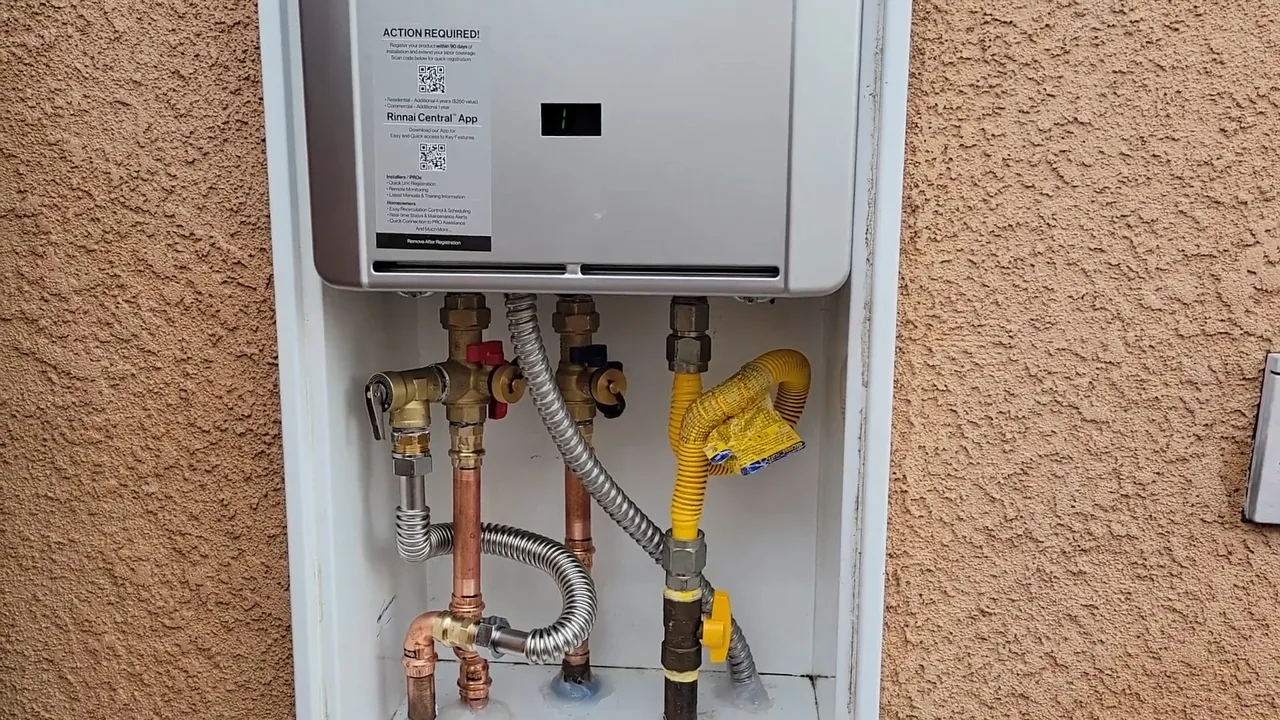
Flushing and descaling a tankless heater before it fails
A tankless heater holds almost no water, so every gallon passes through a narrow heat exchanger. Minerals in hard water coat that exchanger over time. The result is lower flow, lukewarm water and error codes. A flush with a descaling solution removes that scale.
Hard water is common where Arizona communities draw on groundwater. This page gives no hardness number for Wittmann, so check your provider's yearly water report. A softener upstream protects the unit, and the softener and filter page explains how that works.
Signs the unit needs attention
- Hot water that turns lukewarm during a shower.
- An error code that returns after a reset.
- Slow hot flow at every tap, not just one.
- A rumbling or knocking sound from the unit.
- No flush in the past year or two.
What the flush involves
The plumber closes the isolation valves and connects hoses to the service ports. A pump circulates descaling solution through the heat exchanger. Then the unit is rinsed with clean water, the inlet filter is cleaned and the valves are reopened. Ask whether the plumber checks the vent and the gas connection at the same visit, since the unit is already open.
A homeowner can sometimes do a flush with the right valves, but a gas unit is a poor place to experiment. Wrong valve positions can damage the pump or leave the unit without water when it fires. If the unit has no service ports, the plumber can add isolation valves so later flushes are easy.
Gas model? If you smell gas, leave the house and call from outside. Do not reset the unit or flip switches. A blocked vent can also let exhaust into the home, so keep carbon monoxide alarms working.
Tankless water heater installation in Wittmann
Installing a tankless unit starts with the house, not the box. The plumber checks the gas line size or the electrical capacity, the vent path and the location. A wall near an outside vent route is easier than a closet in the middle of the house.
| Item | Gas unit | Electric unit |
|---|---|---|
| Fuel supply | Gas line sized for the unit load | Dedicated circuit and panel capacity |
| Exhaust | Sealed vent to the outside | None |
| Water | Isolation valves for flushing | Isolation valves for flushing |
| Drain | Condensate drain on many models | Usually none |
Gas or electric: the deciding factors
Gas units deliver more hot water per minute, but they need a vent and enough gas. Electric units are simpler to vent, yet they draw a large load. Many older homes lack spare panel capacity for a whole-house electric unit, so ask the plumber to check the panel before you buy.
Point-of-use electric units are smaller and serve one sink or shower. They suit a far-off bathroom where hot water takes a long time to arrive. They do not replace a whole-house heater.
Sizing by flow, not by gallons
A tank is sized by gallons. A tankless unit is sized by how much water it can heat at once, measured in gallons per minute at a given temperature rise. Add up the fixtures that may run together, such as a shower and a dishwasher. Cold incoming water lowers the output, so winter performance sets the real limit.
An undersized unit gives water that is warm but never hot when two fixtures run. An oversized one costs more upfront and may need a larger gas line. The plumber works from your fixtures and your busiest morning.
Whether the house runs on natural gas or propane is worth confirming from your bills. Do not guess. A larger gas supply is its own job, covered under gas piping and sizing. Because Wittmann has no town government, county rules usually apply, so ask the plumber what your address requires.
Hot water fading or a unit to install? Call dispatch.
Say gas or electric and what the display shows.
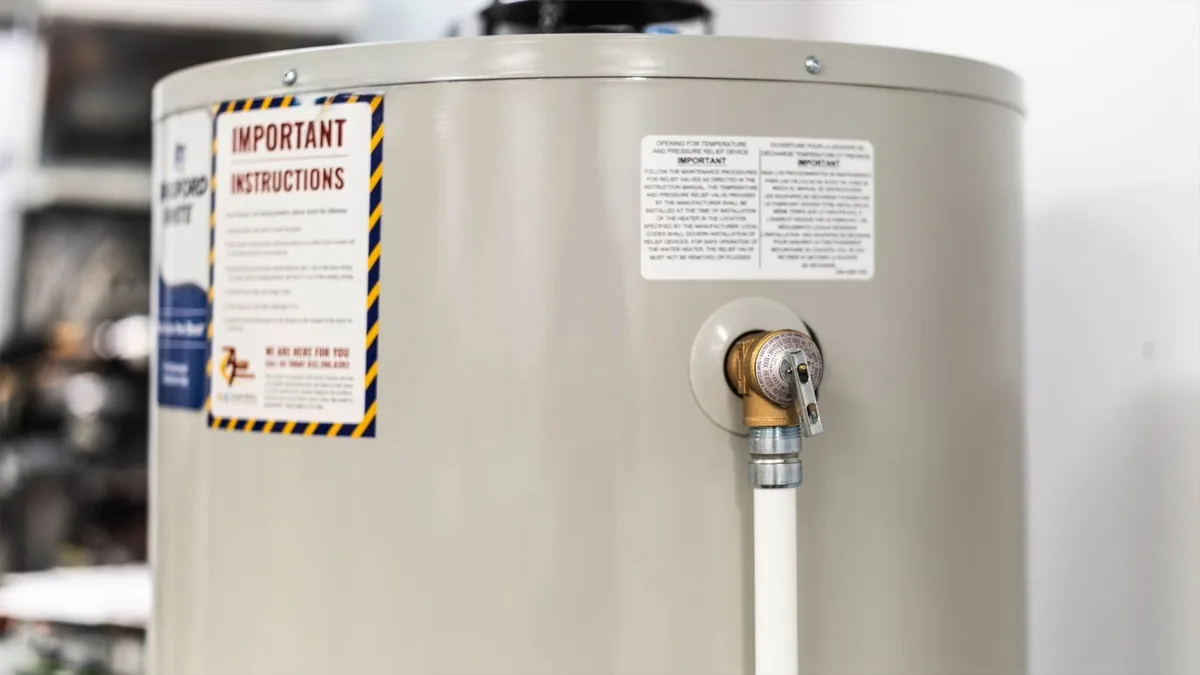
Tankless versus tank: replacement and conversion
If you already own a tankless unit, replacement is usually like for like, and the connections stay. Converting from a tank is different. The tank sat on a small gas line and a simple vent. A tankless unit may need more of both.
That work adds time and cost, so ask for it in writing before you decide. If your tank is leaking right now, replace it first and plan the change for later. The tank installation page covers that quicker path.
A conversion also changes the water side. Tankless units need isolation valves, and the old tank's relief valve and drain pipe are removed or reworked. The plumber caps the old gas or electric supply safely and repairs the wall or ceiling where the old vent came through. Ask for that list in the quote.
Brand matters less than support. Pick a model the plumber knows how to service and for which parts are available. Keep the model and serial number for warranty claims.
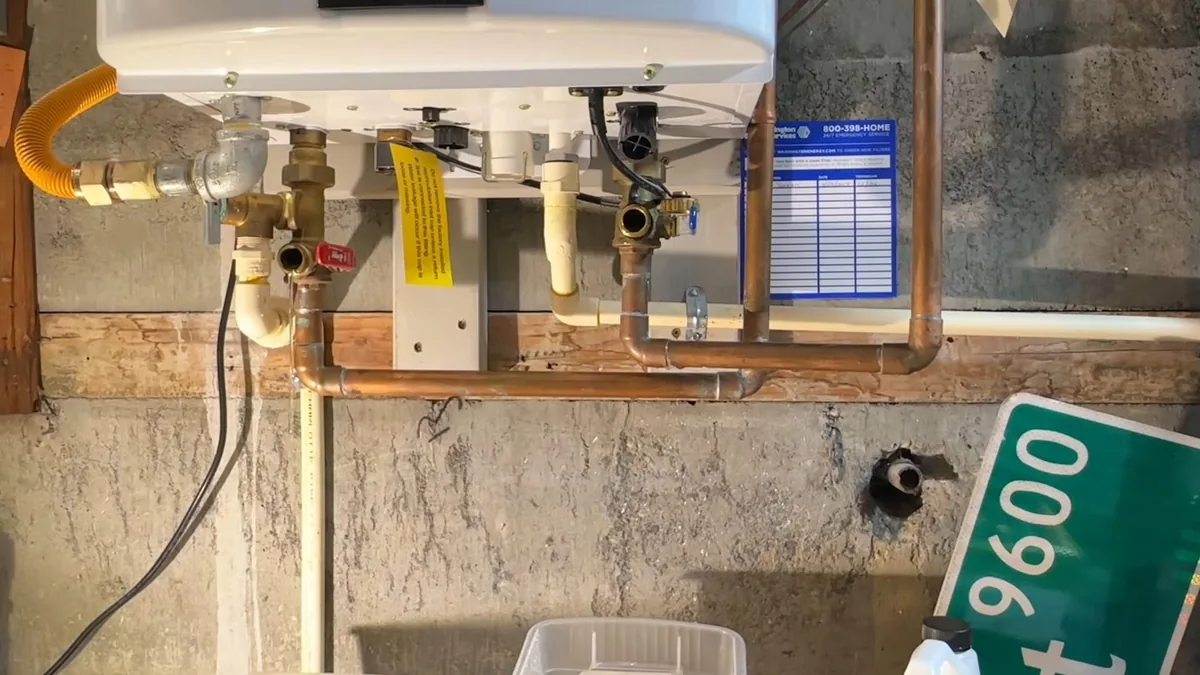
Tankless water heater repair and troubleshooting
Most faults start with scale, a blocked inlet filter, a vent problem or a failed sensor. An error code points to the area, but the code alone does not name the part. Write it down before you call.
Common faults and what they usually mean
| What you see | Likely cause | Usual next step |
|---|---|---|
| Lukewarm water at every tap | Scale on the heat exchanger | Flush and descale |
| Hot water cuts off, then returns | Flow below the minimum, or a dirty filter | Clean the filter, check flow |
| Error code after a reset | Sensor, igniter or vent fault | Plumber reads the code and tests |
| No hot water at all | No gas, no power or a tripped safety | Check supply, then the unit |
The plumber checks flow, gas or power, the vent and the heat exchanger. A flush often clears scale-related codes. A failed igniter, flow sensor or control board is replaced as a part. If repairs keep returning on an older unit, replacement may be the better choice.
What a visit costs depends on the fault and the model. The cost factors guide breaks down the factors behind a quote. Water on the floor under the unit is a different problem, covered by water heater leak repair. If it has spread, see the drying after a leak.
Error code or cold water? Call the dispatch line.
Ask whether a visit can happen today.
Four tankless questions, answered
Can a tankless water heater replace my old tank?
Often yes, but it is a conversion, not a swap. A tankless unit may need a larger gas line, a different vent or a heavier electric circuit than your tank used. The plumber checks those three things first. If they all fit, the change is straightforward. If not, you can see the added work before you commit.
Is tankless better than a tank water heater?
It depends on how the house uses hot water. A tankless unit heats on demand, so it does not run out during a long shower. A tank has a lower upfront cost and simpler repairs. Neither is better in every home, so describe your household's busiest hot water hours when you call.
Does a tankless water heater need to be flushed?
It does. Scale builds up inside the heat exchanger and reduces flow and heat. Arizona groundwater is commonly hard, so flushing matters here. Your utility's water quality report has your hardness number. The plumber flushes the unit with a descaling solution and checks the inlet filter.
What does a tankless water heater need to work properly?
A gas unit needs enough gas supply, a sealed vent and a drain for condensate. An electric unit needs a dedicated circuit sized for its load. Both need a water supply with steady pressure and an isolation valve set for flushing. Ask the plumber to confirm each item for your house.
Plan a flush or a conversion. Call dispatch.
Day or night, someone answers.
- Licensed and insured plumbers
- Same-day service when available
- 24/7 emergency dispatch
- Licensed and insured plumbers
- Same-day service when available
- 24/7 emergency dispatch